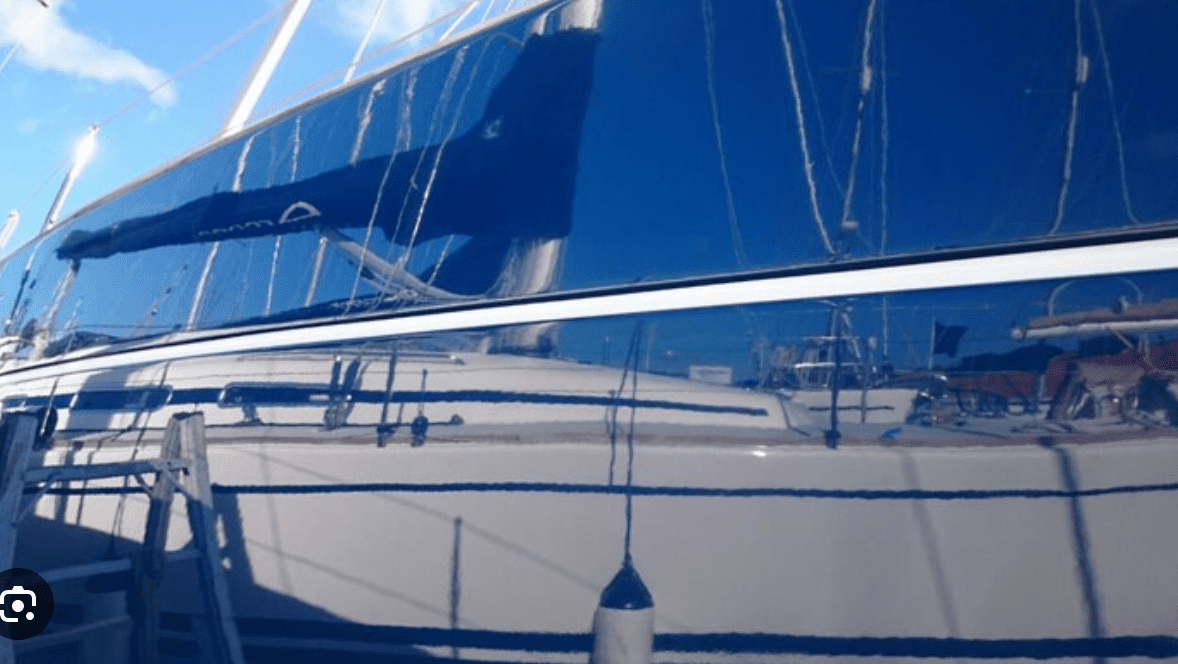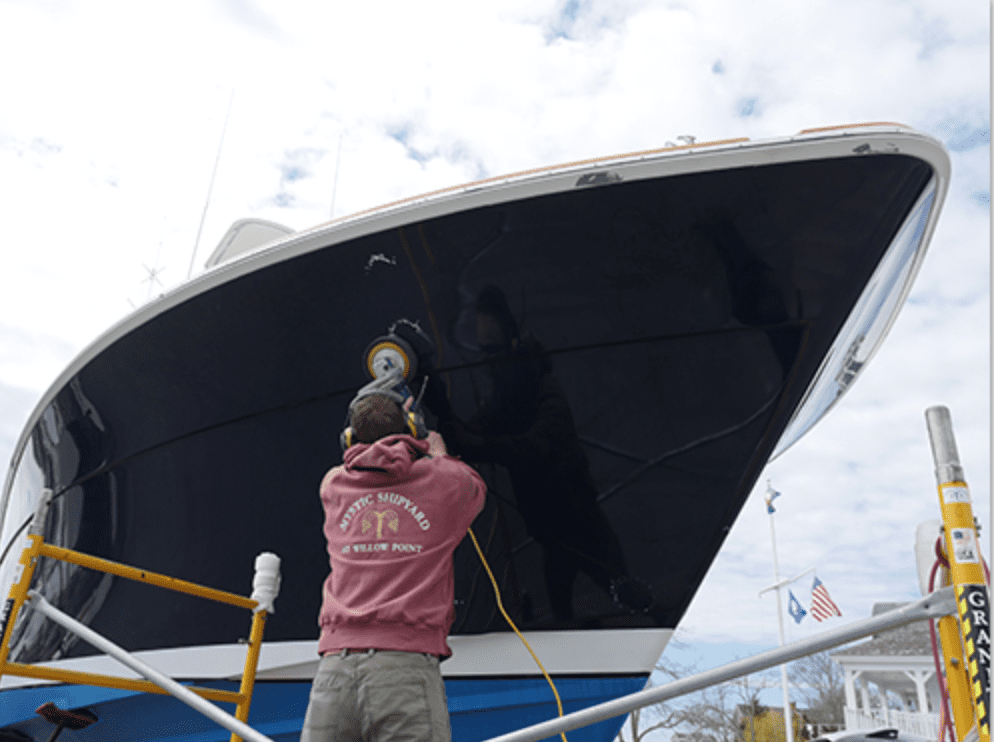
Boat finishes take a beating
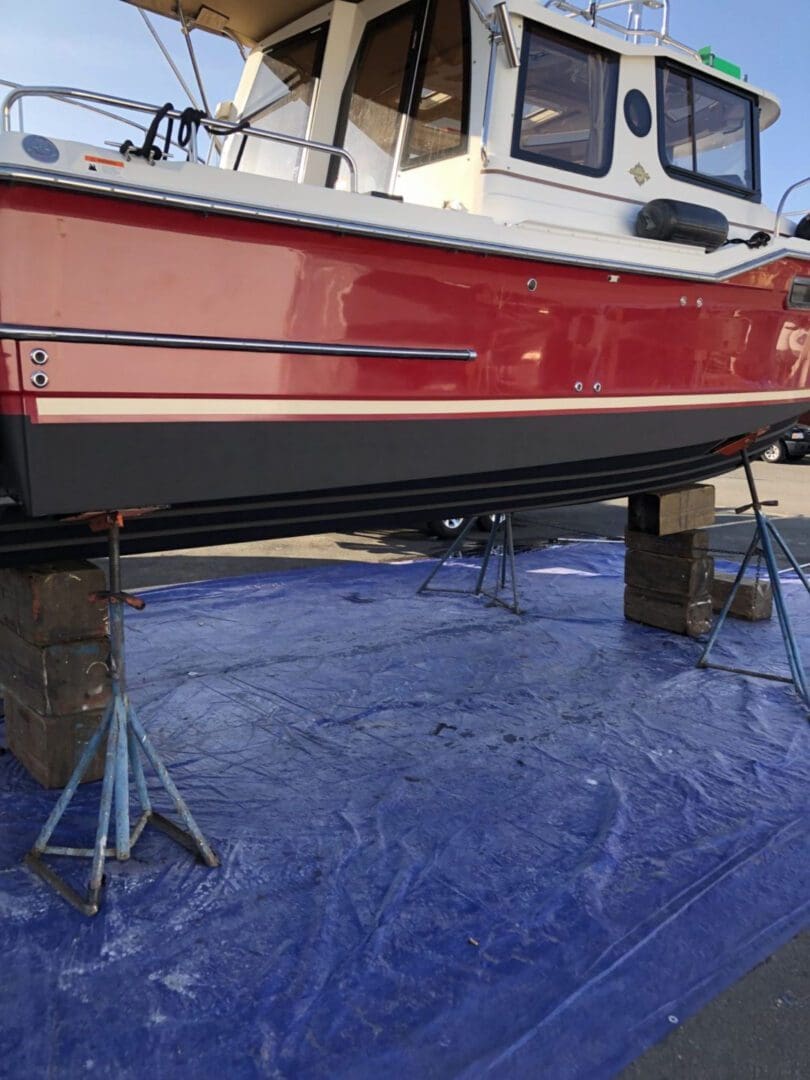
UV rays break down the pigments in gelcoats and paints, causing the colors to fade, and can also cause the outer surface to turn chalky and deteriorate. In oxidation, heat and oxygen combine to break down the gelcoat or paint’s molecular structure, eventually leading to a dull porous surface. In addition, wind and currents can lead to docking mishaps, adding scrapes and chips to the hull. When a larger accident occurs, after the structural repairs are made, repainting the entire boat may be the best way to ensure that the repair is unnoticeable.
A boat can be re-gelcoated
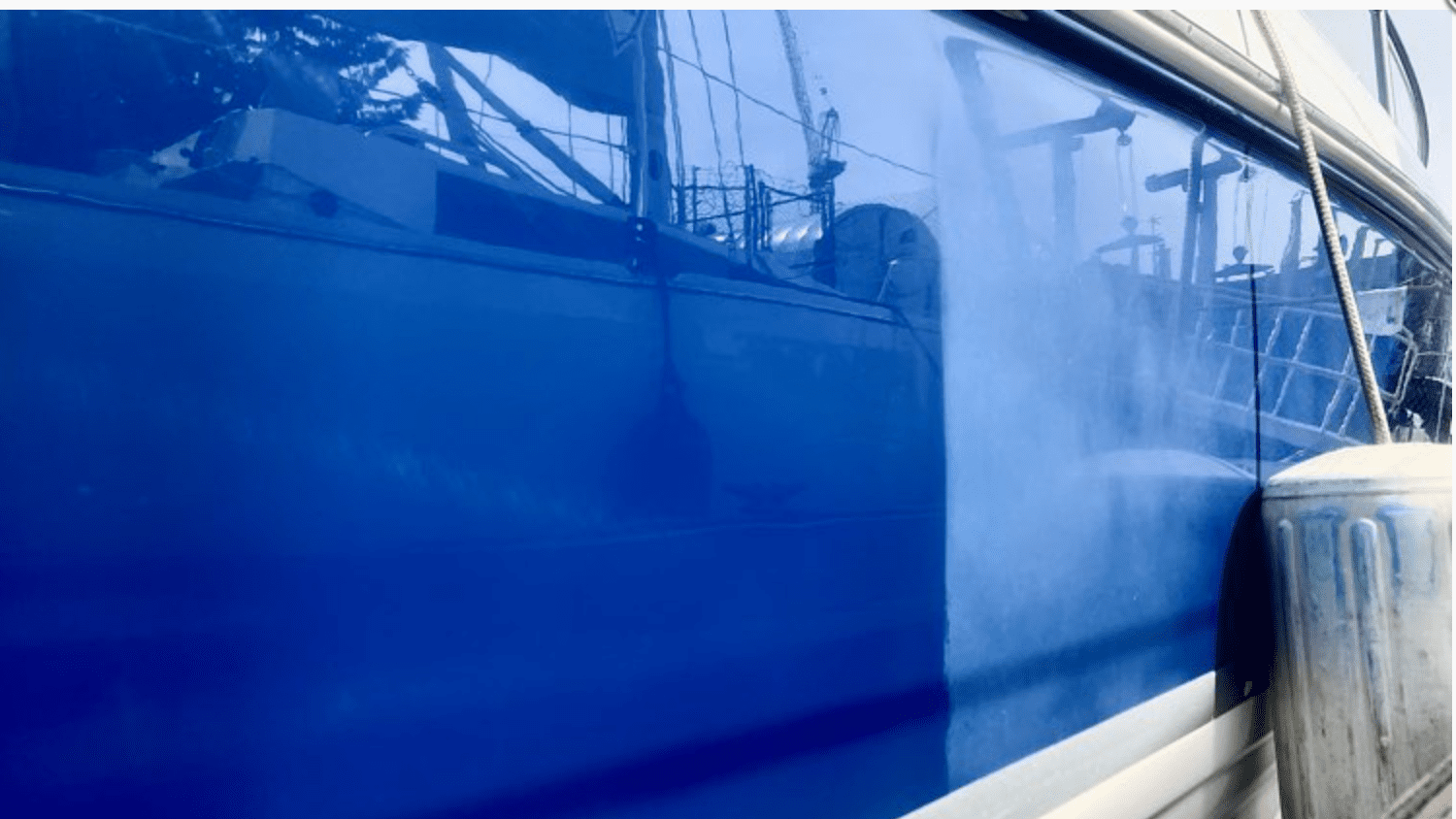
While it is possible to re-gelcoat a boat, we generally only do that on the topsides of smaller vessels, like a 13-foot Whaler or maybe a J-24. Gelcoat does not spray on as a smooth high gloss finish. It is thicker than paint, does not flow out as well. The sprayed gelcoat finish is slightly textured and semi-gloss. To achieve a smooth high gloss finish the gelcoat must be sanded with progressively finer abrasives, from 400 grit through 2000 grit, and then buffed with rubbing compound. While the end result is beautiful this is not a practical way to refinish a larger vessel.

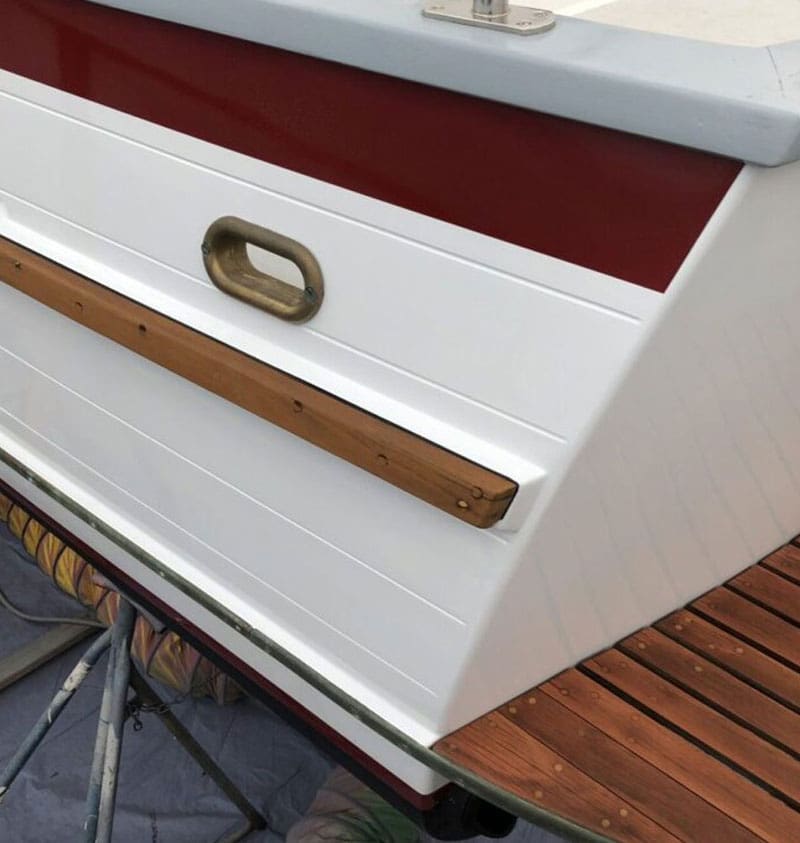
An LP (Liner Polyurethane) paint job is usually the preferred choice for boat refinishing
An LP painted surface is harder and more durable than a gelcoated surface. This means that the painted boat not only retains its color and gloss for much longer than the boat with a gelcoat finish, but is also much easier to maintain and keep clean as dirt and grime can’t get a purchase on the smoother, harder finish. It’s not uncommon for us to encounter boats that we painted ten or fifteen years ago that look like they haven’t aged at all.
At Northwest Marine Fiberglass we’re experts at yacht refinishing and are proud of our LP paint jobs Taking a worn, beat up, or neglected vessel and restoring it to its former beauty is extremely satisfying work. We have years of experience, and after well over 100 paint jobs we still get excited and fully engaged in ever paint job we do.
Our process
Set up
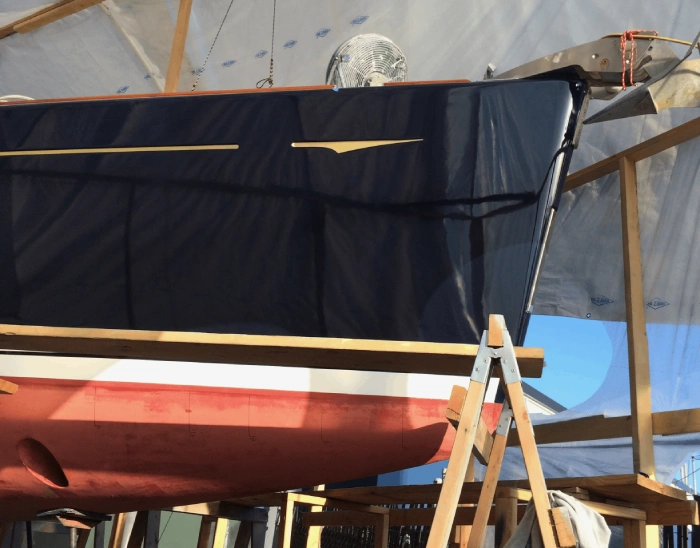
The first step in yacht refinishing is to set up a heated, ventilated spray enclosure to contain dust and overspray and to provide the optimum environment for the chemical curing the materials require.
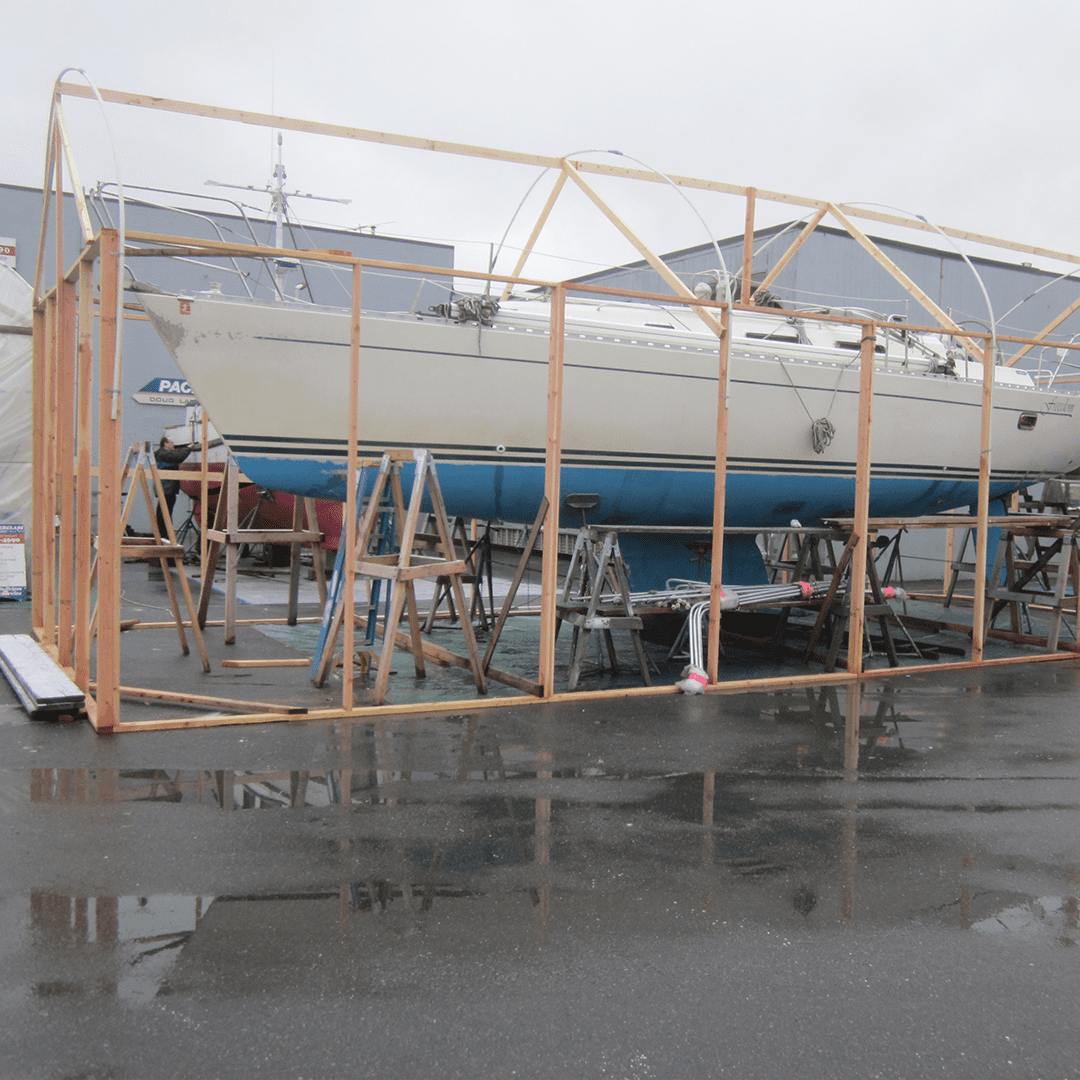
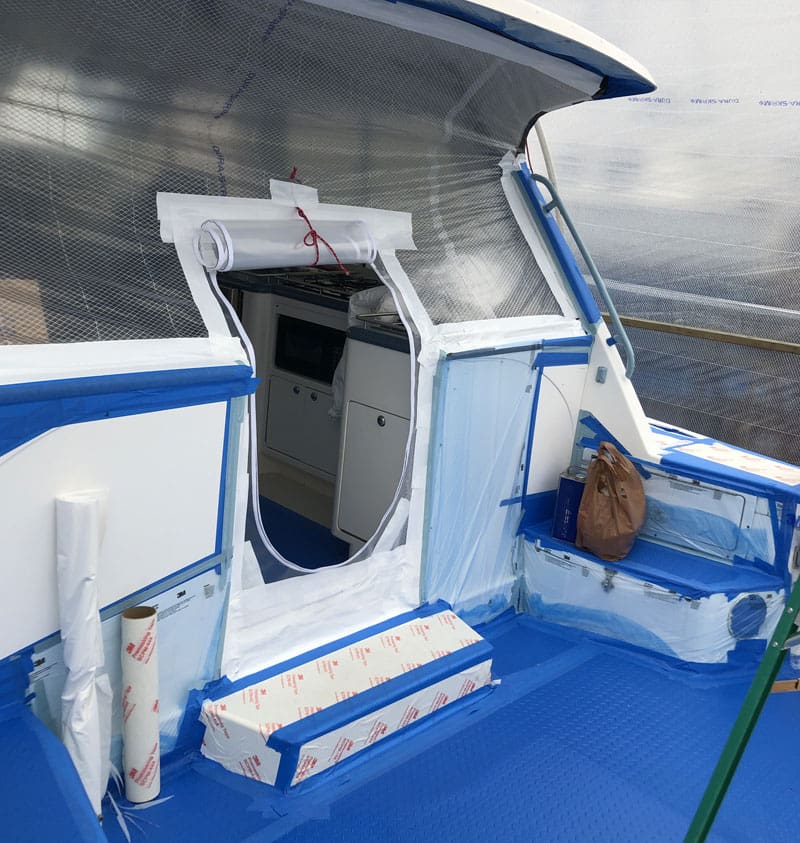
Prep work
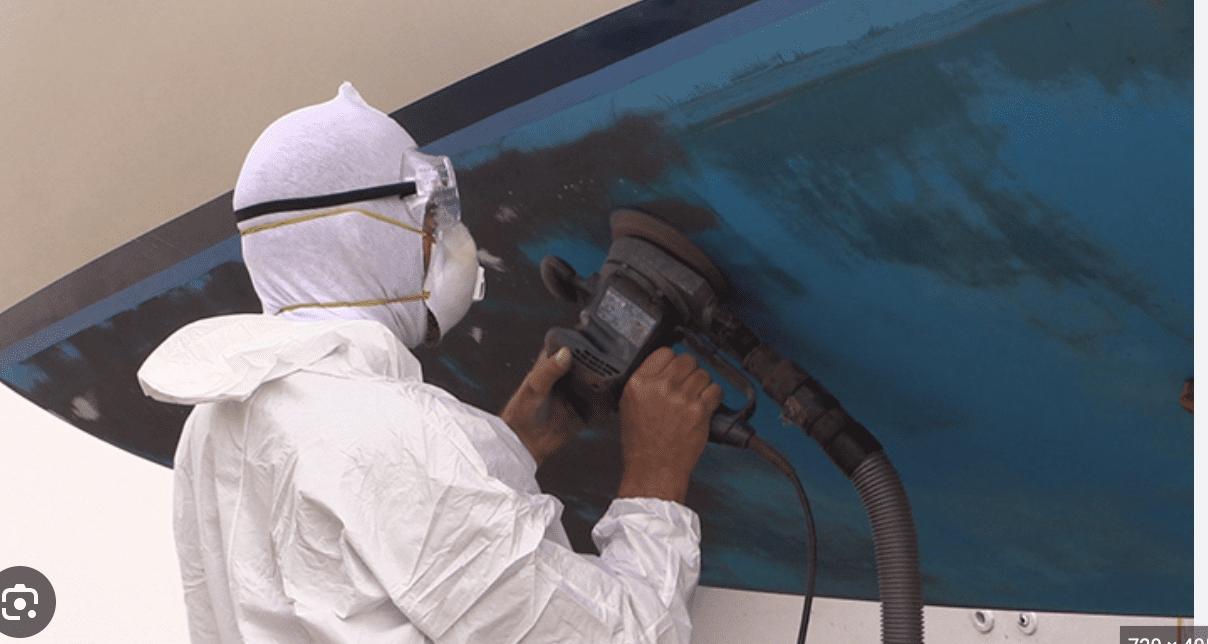
Hardware in the way of the paint job is removed, along with any vinyl graphics. The hull is solvent washed to remove any surface contaminants, and small nicks and scrapes are filled with a vinyl ester filler prior to sanding with a medium grit paper.
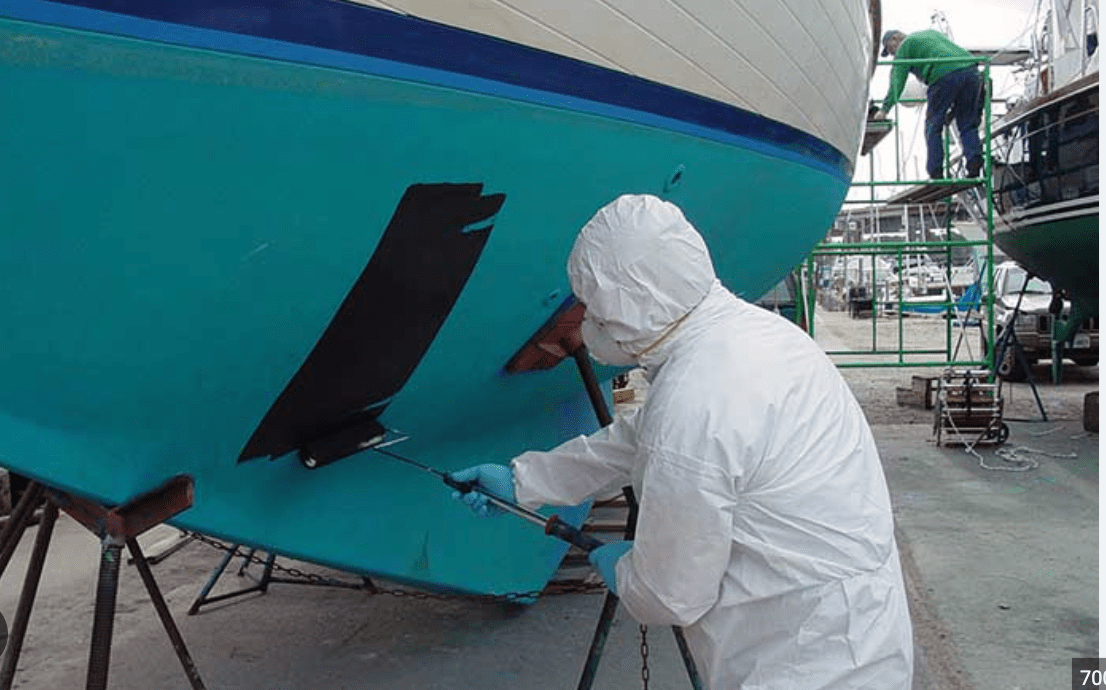
Clean up and solvent wiping with Awl Prep surface cleaner is followed by masking and application of four coats of Awlgrip 545 epoxy finish primer. In cases where the hull
surface is in very poor condition we prime with a high build epoxy primer and sand it prior to priming with the finish primer. The primed hull is inspected, and any surface imperfections are filled with vinyl ester filler, then the primed hull is sanded with 400 grit.
Cleanliness
A clean environment is critical so after the primer has been sanded the boat is de-masked and the entire shop and staging around the boat is hosed down from ceiling to floor, and the hull is washed with soap and water, then dried with lint free rags. After an overnight dry time, the boat is re-masked, wiped with surface prep solvent and a tack cloth, and is ready for painting
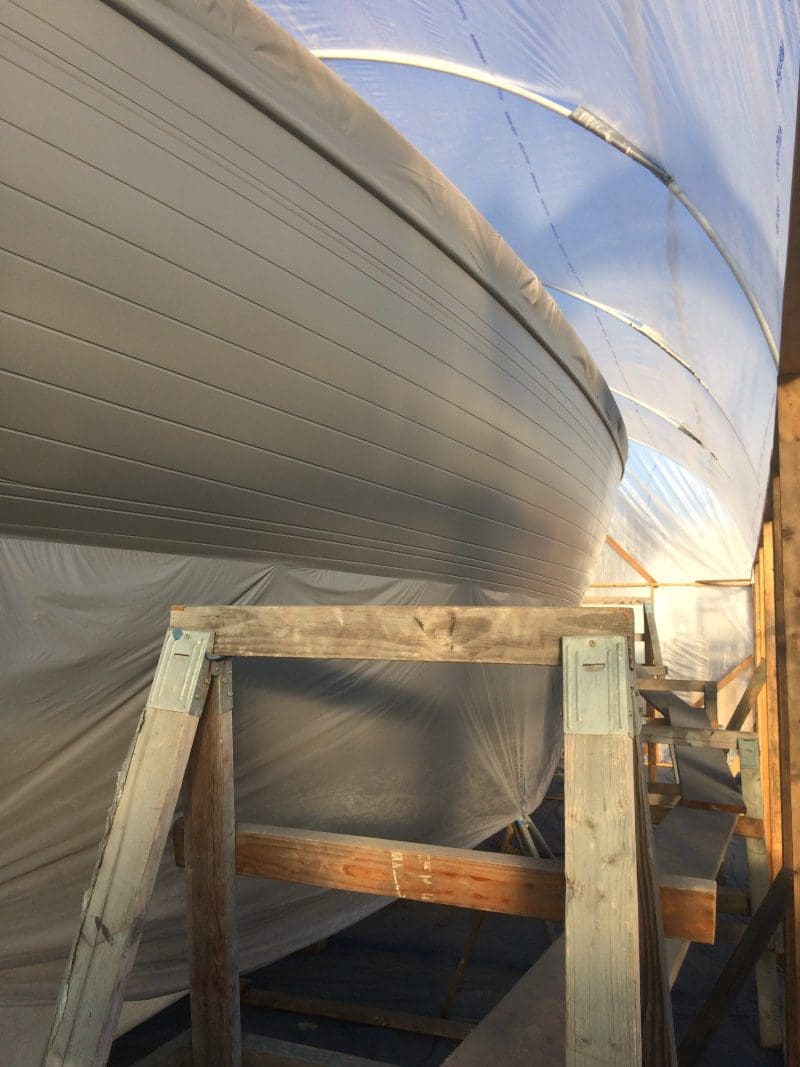
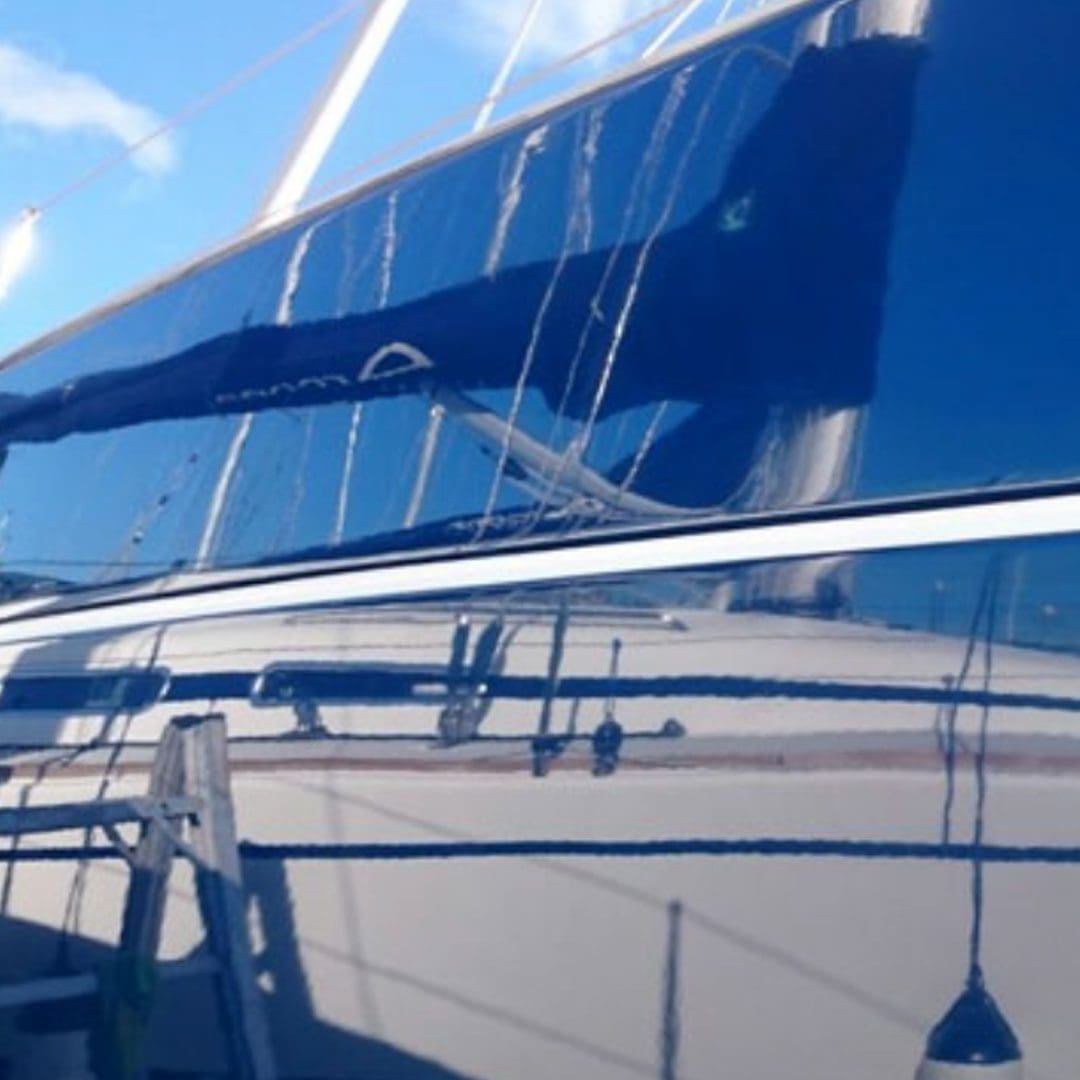
Topcoat application
Three coats of LP topcoat are applied with waiting periods of about 45 minutes between coats. We generally use Awlgrip, but are happy to use other paints like Aexseal if that is the owners preference.
After the paint has been given a couple days to cure, often over a weekend, the boot top stripe and shear stripe are laid out and sanded.
The boat is re-masked, and the stripes are given three coats. Paint thinning, spray gun adjustment, and applicator technique determine the final result, and at Northwest Marine Fiberglass our experience, product knowledge, and care ensure a finish that is beautiful and will hold up over time.
Cost
Topside painting prices vary and depend on the condition of the vessel, but for many boats in the thirty-five to forty foot range the cost of a paint job is $25,000 to $35,000. In the fifty-to-sixty-foot range closer to $40,000.

Boat restoration
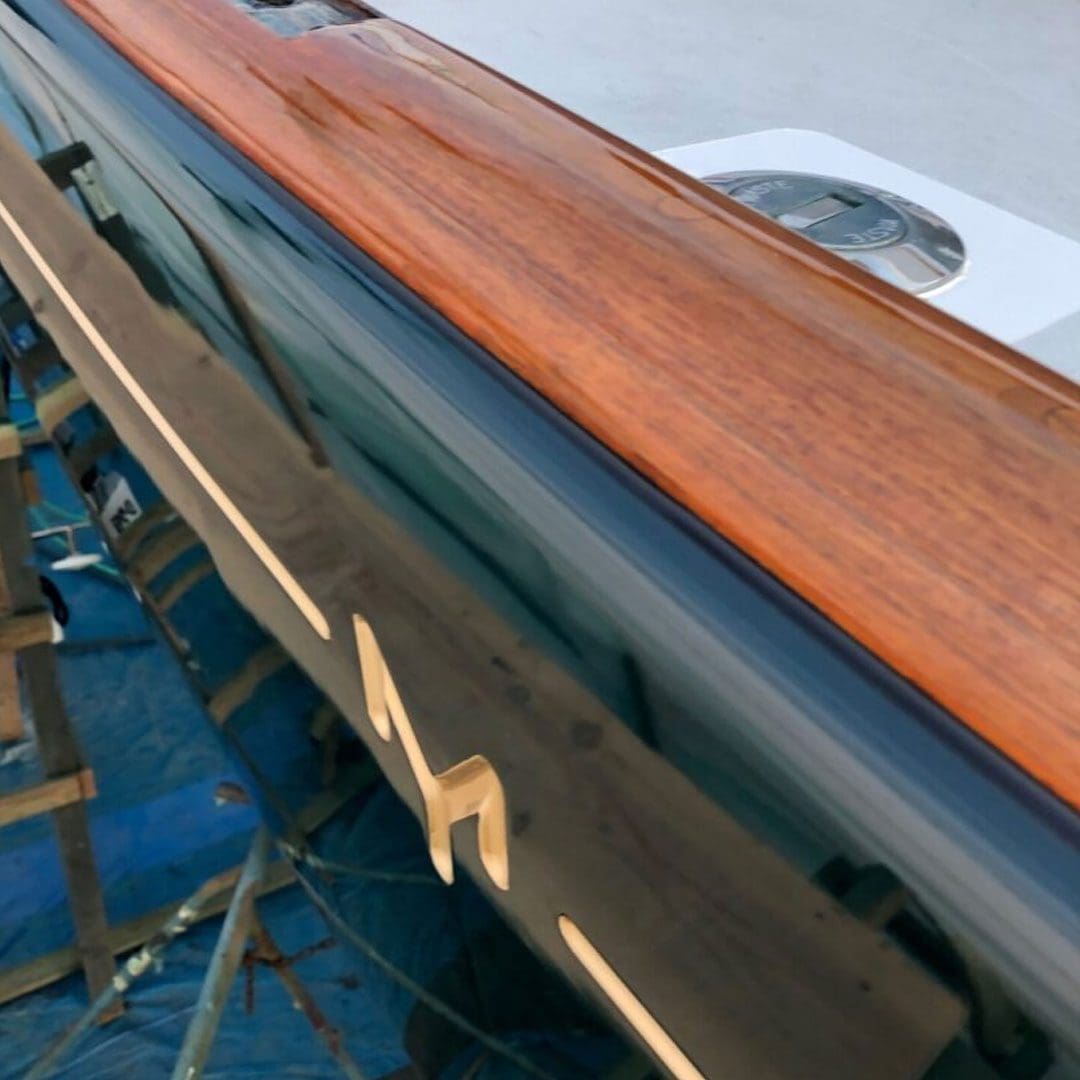
At Northwest Marine Fiberglass one of our favorite jobs is one where we refinish a boat from top to bottom, perhaps stripping and re varnishing teak toe rails and cockpit coamings and removing and upgrading hatches, hardware, and portlights. At some point the boat refinishing job crosses over into what we would call a boat restoration. A boat restoration job can take three or four months and cost between $80,000 and $150,000, more in some cases. Because of the expense they don’t come along often, but when they do, we shine.
FAQ
Services